Sunday, January 31, 2016

Key Lessons from My Improv Instructors

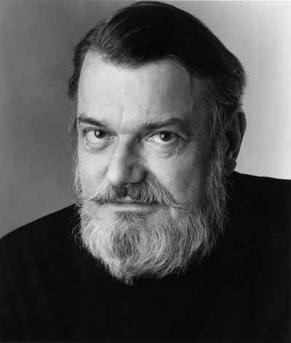
Viola Spolin (20th-century innovator
in improvisational theater)
Here is a small collection of improv notes and concepts I got from various instructors and coaches. Of course, there is overlap. Pretty much everyone agrees that performing believably is important so sometimes I'll put a note like "Play it real" under the first teacher who really emphasized that concept to me:

ANTHONY ATAMANUIK
1. Play it real.
2. Don't be afraid to make a choice.
3. What is the improviser really saying?
4. When you see something in a scene, really see it with detail.
5. Justify.
6. Commit.

MICHAEL BERTRANDO
1. There are no rules, darling. It's make-em-ups.
2. Let's focus on scenework. Don't worry about the form, tag-outs, or callbacks unless they come naturally. Otherwise, people get too heady instead of being present.
3. Before you even say anything, people have prejudices about who you are based on how you appear. Be wary of what those are and play with them.

MICHAEL DELANEY
1. Make the active choice instead of the passive choice.
2. Agree to a fault.
3. If something happens that you didn't expect, then let go of those expectations and embrace what is happening now.
4. Is that really unusual or is it typical? We really want to discover original games.
5. What's wrong is right in a Harold.

ARMANDO DIAZ
1. (When asked about the most common reason a sketch flops) It lacks truth.
2. Be very mindful of who you are (i.e. point of view). That will help propel the scene and play the game.
3. Why are you taking an improv class? Is this something your parents are making you do? Then don't worry, relax, and stop judging yourself so harshly before you even do anything onstage.
4. Take an on-camera class, and see what you look like on camera. After you're scarred, use that information to see how you come off onstage.

CHRISTINA GAUSAS
1. Focus on what's going on now. Don't dwell in backstory, planning, or people not in the scene.
2. Great artistry is the marriage of technical mastery and the infusion of the artist's personality.
3. Look your scene partner in the eye.
4. Be very wary of your partner's emotions.
5. If you feel stuck in improving as an improviser, become a better listener.

RILEY SOLONER
1. Relax and just be yourself. Talk and act like you normally do.
2. Listen and observe your scene partners keenly.
3. Build on what your scene partner just said.
4. Try beginning the next line with "You're right."
5. Don't let the form restrict your scenes. You want good scenework, not a fancy form.

MARK SUTTON
1. What's going on right now and how does it make me feel?
2. The type of relationship that actually matters is not whether the characters are related, married, co-workers, etc. The audience wants to see how the characters affect each other.
3. Scenes begin with a line about the people onstage or about something outside those people like an object. One is not necessarily better than the other, but they are different and be mindful of that.
4. Make sure to bring it back to the relationship between the characters onstage.


Wednesday, July 15, 2015

Introduction to Eastern Spirituality for Christians and Its Benefits

Dear Christian friends,

From left to right: Krishna, Jesus, Buddha, Laozi
I have been interested in religion for some time now. I probably understand Christianity better than the others I have studied but most recently I have focused my studies on Buddhism, Taoism, and a sprinkling of Hinduism and Confucianism. First off, I think there is nothing in these other religions that has to conflict with your Christian faith (although they might at times depending on your interpretations). I think the spiritual benefits of meditation and studying these other philosophies can be quite enormous so to the best of my knowledge, I will attempt to lay out the connections between Christian theology and Eastern religious beliefs (mostly focused on Buddhism).

In Christianity, Jesus Christ is the son of the one and only God who created the universe. A Hindu could accept this belief fully. To the Hindu, Jesus was an avatar, a human incarnation of Brahman which can be described as the highest or ultimate universal reality. In this sense, a Christian could interpret the concept of Brahman as God. One could say they are the same thing depending on one's interpretation of God or Brahman.

However, a Hindu (or a Buddhist) could also say to you, "Of course, Jesus was God. He got it. He woke up. The truth is YOU are God as well. You just don't know it and don't believe that truth. You're asleep." That is when a Christian could be taken aback and even offended. However, let's analyze that to figure out exact what he might mean by that statement.

Who are you? You say you are a Christian and you believe in the resurrection of Christ and read the Bible and attend church and spread the Good News and pray and so on. But this notion of self that you have when you say, "I believe" or "I love", this "I", self, or ego, what is that?

Buddha just riding the wave
Well, aren't you a child of God, borne out of His Creation which encompasses His Being? His Spirit or essence moves through and with you and, in a fundamental sense, that is really what you are. If it helps, think of the waves moving in the ocean. What is a wave? A wave is a part of the ocean that peaks out with the crest on top and a peak underneath that you can surf on. That wave is you and the ocean and all the energy within it is Brahman or God. That is one interpretation and is one of the key concepts of Buddhism.


Let's shift gears slightly and discuss salvation, or more simply, finding peace and happiness. Jesus told his disciples to leave all worldly possessions behind to join him on their spiritual journey and said that it is harder for a man attached to his abundance of material goods to enter the Kingdom of God than it is for a camel to go through the eye of a needle. This is actually the same teaching of Siddharta Guatama (the "Buddha") who lived between four hundred to six hundred years before Jesus' birth. Let's explore this crucial concept.

If you think about it, we are often very miserable and at unease because of our worldly desires (e.g. good food, cars, nice houses, attractive mates, the hottest new gadget). What can be harmful about this mindset of "not-enough" and "more consumption" is that the cure is not "more stuff". It is very much a mindset and although you may be satiated briefly, you will then want more and move on to the next thing you desire. In fact, the pursuit of more consumption is endless. It's an interesting peculiarity of human psychology.

What, then, is the key to happiness? The ultimate key to happiness is within YOU all along, not "out there somewhere" like we are often inclined to think. You get into Harvard and think that is where you will be happy or get into a romantic relationship with that person with whom you are infatuated and think life will be like in fairy tales. But the truth is that there are people who are rich, have beautiful families, own many fancy homes and vehicles, and are adored by millions around the world and are deeply unhappy.

Kurt Cobain in NYC, five months before his suicide at the age of 27
Personally, this shift in mentally has benefited me well. I have chronic lower back pain, below-average kinesthetic ability, tens of thousands of dollars of student loan debt, a very tiny "bedroom" in Bushwick that cannot fit a proper bed, many of my closest college friends who were in my freshman class do not live in NYC, and a whole host of other "problems" I can mention. However, I am relatively healthy, do improv and sketch, have a great family, have ready access to food and water, can access vast amounts of information via the Internet, and live in a fantastic city in a wealthy, diverse country with enormous opportunities. When I think about the important things in life and what I already have, I am able think in perspective more clearly and really appreciate life. Perhaps being grateful precedes being happy and not the other way around.

There are other topics we can discuss like the nature of consciousness, morality, meditation, spiritual experiences, death, etc. but I wanted to highlight what I think are the core concepts in Eastern spiritual teachings as I currently understand them. I may write about other related topics later based on interest.

Sincerely,
Lester

Thursday, March 26, 2015

What Makes a Good Improviser?

Del Close (cofounder of ImprovOlympic) was an
influential improv instructor who helped develop
what long-form improv is today.
I have been studying and performing
improv since August 2013. I have been fortunate enough to have had great teachers, coaches, classmates, and partners in New York City. Like many people, I started at The Upright Citizens Brigade (UCB), but I have also ventured out to The Annoyance, The Magnet, and The People's Improv Theater (PIT). I have thoroughly enjoyed this journey, although it has been a slow one. At least for me, my development as an improviser has been very gradual, but I am quite certain I enjoyed every moment of it. Improvising scenes rejuvenated my interest in performing and has even given me significant peace of mind with what happens onstage and in life.

I often contemplate on how to improve as an improviser. Here are some thoughts on my research into what makes someone a good improviser. I find that these are good to reflect upon when there are often different philosophies on what makes improvised scenes work.


WHEN YOU ARE IN A SCENE:

1. Listen. Listen to your scene partner. Listen to yourself. Listen. Listen. Listen. This is probably the best skill you'll develop as an improviser. Pay attention to the words, the inflections, facial expressions, posture, body language. Be aware of everything that's going on in your scene, including your own self. Eye contact is great for this.

2. Be present. That sounds like meditation instruction because improv is arguably a form of meditation. Don't think so much about what is going to happen two minutes from now and where you think the scene will go. That's when you can get too caught up in your own head and get weighed down with useless thoughts.

3. Be active. Show, don't tell. Do object work. Talking heads can be fun to watch but don't forget that you can be doing the activity instead of talking about it.

4. Commit hard. You are making up scenes so make what you do and say believable by committing hard to whatever you do. Good acting will often go a long way in improv.

5. Make strong choices. Strong emotional, character choices can help you a long way here. There is no "wrong" choice so don't be afraid to make one.

6. Give and receive gifts. Christina (Gausas) phrased this well when she told me that your gift is only a gift if your scene partner receives it. Too often, gifts are dropped by not listening or not accepting them.

7. Agree. No one likes it when a scene partner denies the reality you help to establish. Agreeing will help move your scenes along a lot more smoothly. Argument scenes between characters can work as long as the improvisers are in agreement about what is going on in the scene. That said, beginners should usually avoid argument scenes since they often still need to practice agreement.

8. Have fun. This may be the best advice. After all, why else would you be doing any of this?


MORE GENERALLY:

1. Find good teachers. A good teacher will inspire you and can lead you in a good path for you to develop. Reputation can help but you will ultimately have to find out for yourself which teachers' teachings resonate with you.

2. Be nice. It is somewhat of a small community and it is full of great, kind people. Let's keep the vibes positive. Improvising is so much more enjoyable when we all like each other's company.

3. Practice a lot. There's the 10,000-Hour Rule. You'll get there if you practice 20 hours a week every week of the year for ten years.

4. Learn as much as you can. Know how to just play yourself. Know how to play characters very different from yourself. Can you do a 30-minute scene in one location with only one scene partner? How about a one-hour form with group games, walk-ons, tag-outs, edits, split-scenes, call-backs, and time-dashes? Can you play organic? Premise-based? You can always have preferences and what works best for you, but I think having some range at least initially can help you. Also, the more you try, then the more you know what you do enjoy and don't.

5. Live life. We each have our own unique life experiences from which we can draw. The knowledge we acquire from them fuel our improvisations and help us find our own voices as artists.

Thursday, June 26, 2014

Cures For Emotionally Unintelligent Men

In Asian culture, an emotional man is considered weak or feminine.  Anger may be acceptable if he is defending his pride and/or asserting his authority or power but he should not be overly enthusiastic, sad, or even loving.  To some degree, this notion of masculinity permeates almost all cultures, including America's.  This is problematic but there are ways we can fix this.  If you are a man (especially if you are introverted and conservative), you will likely benefit from the following recommendations.

First, take good acting and improv classes.  This is probably the fastest way to force yourself to improve your emotional intelligence by working with others as a team.  As a stage performer, you really have to be able to be in tune with the emotions of yourself, your scene partners, and your audience.  Good beginning courses will be hard and you may have to work on improving your listening and emotional connecting skills for years to become very good.  One amazing exercise is staring at your partner's eyes for several minutes straight and emotionally syncing and reacting.  I have seen people cry from doing this and my jaw dropped the first time I saw it.

Second, get to know strangers well.  Go out and meet new people and get to know them on a personal level fairly quickly.  This may take some of you some time to get good at.  Try to find out an interesting personal fact about the new person and think about what type of person she is, why that fact is important to her, and how she feels about it.

Third, volunteer or attend events about causes you believe in.  This will help you get in touch with your passions and values while meeting like-minded individuals.  Bonding over shared beliefs can lead to strong emotional connections that can lead to friendships.

Fourth, meet emotionally intelligent geniuses.  Every once in a while, I meet individuals who are exceptionally emotionally intelligent.  They probably were born with a great deal of natural talent but the really good ones will always try to improve their skills.  Learn from them since they have mastered something you are trying to improve at.  If they are really good, they can help articulate your own emotions in a social interaction better than you can; it is amazing.

Finally, openly care for someone as best as you can.  One of the most difficult things I have ever done was trying to make a romantic relationship work with someone very different from myself.  The relationship ended but I learned so much about the importance of listening, forgiveness, selflessness, giving, caring, understanding, empathy, vulnerability, acceptance and overall emotional awareness and control.  This can be very painful but will change your life for the better as long as you have a positive attitude.

Friday, June 13, 2014

10 Fast Workouts For Busy People

There are times when life gets busy and skipping workouts can become more frequent.  Never fear.  Here are some routines I use when I am very short on time and still want to give my body a full workout.

1. Olympic weightlifting- Go to the gym and focus on improving your snatch on one day and then your clean & jerk on another.  Your workout can definitely be less than 30 minutes.

2. Farmer's walk- Hold a heavy weight in each hand (or use an apparatus like a trap bar) and walk.  This will work your entire body and is one of the best total body movements for athleticism and a lean physique.  A good session can be less than 15 minutes.

3. Twenty-rep squats- This is an even shorter workout but it is psychologically very demanding.  Do some warmup sets on the back squat and put on a weight that would normally challenge you if did ten reps without pausing in between reps.  Now, try to do twenty reps with that weight by breathing when you stand in between each rep.  Take as long as you need but keep the weight on your back and really push yourself.  This should take less than 20 minutes even with a warmup.

4. Rest-pause- This is a technique where you perform as many repetitions on an exercise with a challenging weight until your form breaks down (aka technical failure), rest for 12-15 deep breaths, perform additional reps until technical failure with the same weight, rest for 12-15 deep breaths, and do a third set until technical failure.  Do this with a pressing exercise (e.g. dips) followed by a pulling exercise (e.g. chinups).  This can take less than 10 minutes for a good upper body workout.

5. High Intensity Training- I used this for at least a year and this is the method of choice for some bodybuilders like Dorian Yates, Sergio Oliva, and Mike Mentzer.  Select two body parts and do two exercises for each for the day and do only one working set per exercise.  This set will be done very slowly during both the concentric and eccentric portions with a slight pause in the fully contracted portion of the exercise.  Let the eccentric and concentric portions take four seconds each.  The set is done when you cannot lift the weight anymore (aka muscular failure).  If done correctly, the single working set of the exercise is very difficult since you have to put as much effort as you can into that one set.  A workout can be less than 15 minutes.

6. Bodyweight Tabata- Do speed squats for 20 seconds, rest for 10 seconds, do burpees for 20 seconds, rest for 10 seconds, do mountain climbers for 20 seconds, rest for 10 seconds, do speed skips for 20 seconds, rest for 10 seconds, and repeat the cycle once more.  Make sure to make each 20 second interval fast and intense.  This is not a great muscle-building routine but it will keep you somewhat in shape in such a small amount of time.  This will take 8 minutes total.

7. Prowler push/Sled drag- I have not done these since my football days and it can be hard to find a facility that provides either of these but they provide some of the best workouts you can imagine.  You can be pretty wiped out after 10 minutes.

8. Hill sprints- Find a hill.  Then, sprint up and walk down it.  Keep doing this until your lungs and legs feel like they are on fire but not until you vomit.  This can also be less than 12 minutes.

9. Kettlebell swings- Take a fairly heavy kettlebell and do swings, snatches, cleans, and/or presses with it for 10 minutes.

10. Turkish get up- Grab a dumbbell, kettlebell, or even a barbell.  Lie down with the weight in the air held by one hand.  Now get up onto your feet with the weight still held high above you the whole time and then go back to lying down afterwards to repeat with the other hand.  Do this for 10 minutes with a difficult weight.

There are so many other things you can do that I have not tried as extensively: Escalated Density Training (EDT), HIIT, circuits, barbell complexes, tire flips, keg toss.  Most people do not need to spend hours every day to be in good shape.  Strong people make things work, even when time is limited.

Monday, May 26, 2014

Are You Racist If You Only Date Within Your Ethnic Group?

The overwhelming majority of Korean parents strongly prefer their children to marry other Koreans.  This percentage will certainly drop if the parents were born in America or if they themselves married non-Koreans but these individuals are statistically rare among Koreans born before 1970.  The familial pressure can be intense so most of the children end up dating exclusively within their ethnic group.  For those who really immerse themselves within the Korean community, dating a non-Korean will often lead to social exile for that would be a form of betrayal to the Korean people.  If you really want to add some spice, get gay-married to a black person.

This social phenomenon is present not only among other Asians, but also blacks, whites, Hispanics, Arabs, and others.  Is this a form of racism?  Of course the answer is, it depends.

As much as I care about older Koreans (especially my family), there is a certain amount of racism in their attitudes about dating and marriage.  Many believe the purity of Korean heritage is special and that it would be contaminated by having children with non-Koreans.  They may not think that Koreans are better than other ethnic groups, but certainly better for their children to reproduce with.  That is at least a bit racist.

The good news is that this mentality has changed significantly in America and is continuing to change.  Korean parents are becoming much more accepting of exogamy and their primary concerns are about whether the family will be happy with having a non-Korean and still trying to maintain their family traditions.  I am not entirely sure how this change occurred but I would credit it mostly to being in a more ethnically diverse nation.  Perhaps the racism they experienced as immigrant minorities in America made them realize that treating and judging people purely based on what they look like is unjust so they reflected on how they have been prejudiced about non-Koreans.  Maybe they befriended non-Koreans and realized some of them are good people too.

However, it is a bit more difficult to consider the Korean children as having racist sentiments for only dating Koreans.  Yes, some may definitely have the same views their parents do about interracial dating but more often than not, they feel they have an obligation to their parents to not date people of other ethnicities.  They will almost certainly feel attraction to people who are not Korean but will think that it would be burdensome and to some degree disrespectful to put that pressure on their families.

Fortunately, this is changing as well.  Statistically, Asian-Americans out-marry at higher rates than any other racial demographic in America.  This is likely due to the fact that Asians are less than 6% of the US population.  We (not just Asians) are genetically programmed to effectively make more copies of our genes and that requires a certain amount of environmental adaptability.  The parents may be upset at first but what are they going to do?  Nag?  They will do that anyways.  Your kids will be their grandkids so that's a quarter of their genes floating around in each of these new bodies.

We have made great progress in mitigating racism in America.  The American government no longer kills Native Americans, sanctions slavery and segregation of African-Americans, and forces Japanese-Americans into internment camps.  We now have black, Hispanic, and Asian American government officials and a biracial President.  Our iconic celebrities include multiracial Americans like Whitney Houston, Bruce Lee, Jimi Hendrix, Johnny Depp, Oprah Winfrey, Muhammad Ali, and Beyonce Knowles.  Even if you are a multi-billionaire, you will be called out and condemned for racist statements (e.g. Donald Sterling).  Eliminating negative prejudices about interracial dating will help us form a more tolerant, happy, and peaceful United States.

Wednesday, February 26, 2014

Focus On Healthy, Not Skinny Or Ripped

The average American male is 5' 9.5" and 200 pounds.  The average South Korean male is 5' 8.5" and 150 pounds.  I know that taller people are heavier but adding one inch should not add 50 pounds.  Yes, there are certainly genetic factors.  Most slim individuals are that way with little effort.  However, one cannot deny that the average American's diet is horrible, largely because of the mass production of readily-accessible, cheap, low-quality, addictive food items (e.g. candy, doughnuts, ice cream, French fries, fried chicken, beer).  There are people who aren't fat despite eating poorly but even though they look normal, they are still putting unnecessary strain on their bodies.

Here's a question.  Does an individual's appearance indicate healthiness or unhealthiness?  To a certain extent, of course!  If you are under 6' and weigh over 300 pounds, you are most likely obese unless you are a professional bodybuilder.  However, what about this guy to the right?  That is former Mr. Olympia, Frank Zane.  He was considered to be a very small bodybuilder (185 pounds) but extremely muscular by normal standards.  A lot of men consider his body to be the ideal male body.  On the other hand, any bodybuilder will tell you that bodybuilding is not particularly healthy.  They ingest lots of supplements and drugs, force feed themselves to gain unnatural amounts of muscle mass, abuse their bodies with intense weight training, and dehydrate/starve themselves (particularly of carbohydrates) when preparing for a photoshoot or a contest.

Our culture has a very bizarre way of looking at beauty.  We look at models and consider them to be the pinnacles of human physique when the truth is that they are genetic outliers who often put in lots of effort to achieve their desired figures for their profession.  In fact, we are so looks-obsessed that adopting a healthier lifestyle is sometimes just a byproduct of our goal to look more physically attractive when it should be the other way around.

An interesting phenomenon is how deluded we are in our physique goals to try to look sexy.  For most men, a thinner woman is not necessarily a sexier woman.  This is only true if she is really overweight.  The same thing is true for men.  After a certain point, any additional fat loss will not significantly add to your attractiveness and will actually reduce your attractiveness if taken too far.  Most men overemphasize muscularity and think that adding an extra half-inch to their biceps or refining their six-pack abs will make them so much more irresistible to women when very few women actually care for the bodybuilder look.  Most of us would prefer lean and fit and there can be a decent leeway for a spectrum of what that would constitute (e.g. David Beckham, Rihanna, Joseph-Gordon Levitt, Beyonce Knowles, Hugh Jackman, Maria Sharapova, Will Smith, Zhang Ziyi, Daniel Dae Kim, Jennifer Lopez, Keanu Reeves, Jessica Biel, you get the picture).
Also, we need to focus on fat loss, not necessarily weight loss, even if we only care about how we look.  We can actually look better and be healthier by gaining weight if we increase our muscle to fat ratio.  That can be done through resistance training using bodyweight, dumbbells, barbells, trapbars, weight vests, weight machines, bands, logs, sandbags, and more.  Don't be afraid to gain weight since fat loss should be the goal, not weight loss.

I am not a huge proponent of calorie counting.  I think the easiest way to lose fat is by lifting weights to build more muscle.  That way, your metabolism will increase so that you will burn more fat even when you are resting.  This can be supplemented with any other type of exercise: aerobics, Pilates, yoga, Zumba, martial arts, sports, swimming, running, rowing, biking, walking, dancing.  What is also important but more difficult to implement is to adjust what you put into your body.  This means getting rid of refined sugars, deep fried foods, and artificial flavoring and colorings that should not be considered real food and increasing your intake of fruits and vegetables in our diets.  Obviously, you should also reduce your intake of tobacco, alcohol, marijuana, caffeine, and other drugs for a healthier body but you probably already knew that.

Main takeaway points:
1. An attractive body is not necessarily a healthy body.
2. A healthy body is almost always an attractive body.
3. If you are overweight, the goal is fat loss which is not always weight loss.
4. Becoming more physically active is easier than changing your diet so start exercising more instead of calorie counting.
5. Diet is important but don't over think it.  If you really have no idea what is a good diet, look into the Paleo Diet and the Zone Diet.  I wouldn't recommend the Atkins Diet.  The Slow-Carb Diet is okay and it worked for me but it depends on your goals.  I lost too much weight doing Slow-Carb and I ended up losing more muscle than I would have liked.