Friday, October 4, 2013

Letter to the Skinny Asian Guy at the Gym

Dear skinny Asian guy,

First of all, congratulations.  You want to change your body to become healthier and more attractive.  Working out will not always be easy but you'll reap the rewards eventually when you have a stronger body and mind.  You will notice that clothes look better on you and you will generally feel more energetic and powerful.  People will notice you more and you will get more respect from both women and men.  In the end, I guarantee that it'll be worth the investment.

Here is the bad news.  You either have no idea what you're doing or you think you do based on what you read online from bodybuilding articles.  You have to realize that following Arnold's Mr. Olympia training is not going to work for you.  His combination of genetics, experience, diet, and supplementation made his workouts work for him.  You have to realize that your situation is vastly different so your approach will have to focus on what works for most people starting out, not what worked for the Austrian Oak in the 1970s.

First of all, I bet your diet is your biggest limiting factor.  I've seen you for months at the gym and you haven't made much progress by lifting the same weights and having the same body.  You are 5' 10" and weigh 125 pounds, making you medically underweight.  I'm 5' 7" and I've been able to bulk up to 170 pounds with very unexceptional genetics.  I know a 5' 9" natural who has reached 215 pounds with less than 10% body fat (but he played football at FIU and has incredible genetics).  Your greatest challenge will be to significantly increase your caloric intake.  An old-school method is to make sure you drink a gallon of (whole) milk a day (GOMAD).  This will ensure that you meet the daily caloric requirement to grow.  Make sure to eat lots of protein (2 grams per pound of bodyweight) from poultry, beef, pork, fish, beans, and eggs.  Eat plenty of good carbs (e.g. brown rice, whole wheat bread, sweet potatoes, yams, oats) and fats (e.g. olive oil, canola oil, fish oil, avocado, walnuts, almonds).  Also, eat as many fruits and vegetables as you'd like.

If you cannot resist the urge to buy dietary supplements, go ahead and buy whey protein from your local GNC or Vitamin Shoppe (or online).  The best time to take it will be immediately after your workouts.  You can also take it before your workouts, after you wake up, and before you go to bed.  Creatine will also help you but this is secondary to whey protein.  I've never been a huge fan of casein but you can try drinking it before you go to bed.  I think ZMA is overhyped and overrated so most of you don't have to bother.  I think multi-vitamins are overrated as well.  Your body will be better off getting the vitamins and minerals it needs through food instead of a pill.  Make sure your diet is solid before you try to perfect anything else.

Now, let's talk about what you actually do at the gym.  Right now, your routine is pretty terrible.  Stop your cable crossovers, tricep extensions, preacher curls, leg extentions, dumbbell flyes, French presses, and whatever ab machine motions.  Those aren't what you should be focusing on.  In fact, ditch the machines altogether and just use barbells and your own bodyweight.  Here are the exercises you should be doing in order of importance:

1. Squat
2. Deadlift
3. Bench press
4. Shoulder press

These are the main lifts you MUST do.  If you focus your workouts on improving your numbers for just those four lifts, you will see much more progress than whatever you were doing before.  If you want a template to follow, try Mark Rippetoe's Starting Strength.  I like Jim Wendler's 5/3/1.

I don't care if you squat like a powerlifter or an Olympic weightlifter.  Box squats are great too as long as you hit the requisite depth.  Just make sure the top of your thighs hit at least parallel to the ground when you go down.  You can deadlift conventional or Sumo; it doesn't matter.  Just lift the damn weight off the floor.  You can use the double overhand, hook, or alternating grip.  If the trapbar will get you to do deadlifts, then use that instead of the barbell.

Make sure to hit the full range of motion for all the lifts.  For consistency, grip the barbell with your thumbs wrapped around, not too far out from shoulder width.  The thumbless (aka suicide) grip is okay for the squat but I wouldn't recommend it for any of the pressing movements.  Also, make sure your spotter on the bench press touches the bar only when you are clearly failing to lift it up after lowering it to your chest.
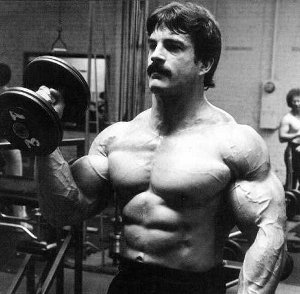
Obviously, my advice is all just to get you started.  You'll have to learn a lot more on your own.  I particularly enjoy material by Jim Wendler, Dave Tate, Ian King, Elliott Hulse, Louie Simmons, Christian Thibaudeau, Joe DeFranco, Charles Poliquin, Martin Rooney, Charles Staley, and Mark Rippetoe.  If you really can't resist bodybuilding literature, check out Gordon Lavelle, Mike Mentzer, Arthur Jones, Dante Trudel (aka Doggcrapp), Dorian Yates, and Mike O'Hearn.  Learn as much as you can to get the most out of your training.

A final note: make sure you are well-rested.  Try to get at the very least seven hours of sleep per night, but eight would be even better.  Your body needs to recover from all the hard training so allow your body to grow so you can become stronger and lift more for your next workouts.

That's it!  You can take my tips or ignore them.  Always be skeptical and find what works for you.  If you have any questions, feel free to leave a comment below and I'll respond as soon as I get the chance.

Yours truly,
Lester

Note: In addition to the main lifts, here are some others that you may want to incorporate (I've used almost all of them but my favorites are in underlined bold):

1. Front/hack/overhead/Zercher squat
2. Clean/snatch (full/power/hang)
3. Row (barbell/dumbbell/upright/bent-over/T-bar/underhand)
4. Chin-up/pull-up
5. Dip (bench/bars)
6. Curl (barbell/dumbbell/reverse/Hammer/wrist)
7. Stiff-legged/Romanian deadlift
8. Glute-ham raise
9. Back raise
10. Good morning
11. Incline bench press
12. Lunge
13. Step-up
14. Hanging leg-raise
15. Close-grip bench press
16. Shrug (barbell/dumbbell)
17. Farmer's walk
18. Barbell hip thrust/glute bridge
19. Landmine
20. Push press/jerk
21. Floor/bridge press
22. Reverse hyperextension
23. Barbell rollout/ab wheel
24. Sit-up
25. Push-up

As you can tell, I don't care for the machines, including the dreaded Smith machines.

Monday, September 23, 2013

Why A Man Cares About A Woman's Number

Every man who begins dating a woman will wonder what her number is.  He already has her phone number so that's obviously not the number he's trying to guess.  It's not her age, dress size, weight, or IQ.  Of course, it is the number of men she has had sex with.  Not how many boyfriends she has had, specifically how many men she has fucked.  (Note: Men usually don't even care how many women she has had sex with.)  Let's discuss why this is.

Feminists respond by saying that our patriarchal society has brainwashed men and women to think women who have slept with "too many" men are sluts and lesser beings, unworthy of serious dating.  This way, men can control female sexuality and can have yet another way to dominate the opposite sex.  I'll admit that social conditioning definitely could play a factor but I do not think that is the main reason most men are so concerned.  I think there is a much deeper male psychological issue but it's often too painful for men to talk about openly.  Since I have somewhat of a defective mental filter, I will try to speak on their behalf.

The reason is actually very simple: men are insecure.  This is true of every man in the world, even the ones who are rich, handsome, smart, and famous.  Men are just as insecure as women are but we are conditioned and wired to not show it as often.  Men know that women are attracted to confident, high-status alpha males so they try to minimize whatever signs of insecurity of which they are aware.  The problem is, our egos can be quite delicate and can be hurt by the external world.

Like women, men receive feedback from the world about who they are that form their images of themselves.  For example, you notice that whenever you sing, people often compliment your voice and musicality.  These compliments will enter into both your conscious and subconscious to shape your self-image.  You think to yourself, "I must be a good singer!  I must have some degree of musical talent."

The same thing is true for dating.  Just like women, men want to feel special.  There is a certain amount of intimacy in sex.  This is true even if you do it for pay.  Unlike other animals, we don't regularly expose our naked bodies to strangers in public.  Sex is also what keeps our species alive.  Biologically speaking, love evolved to potentially keep us together long enough so that we can raise our children well.  Thus, there is some link between sex and love in our species.  After all, we are all part of a series of vital sexual episodes that have been unbroken for billions of years.  Therefore, if a man finds out a woman has slept with more than a certain number of men (whatever that arbitrary number may be), he will question how much he really means to her.  This will also trigger other insecure thoughts such as "maybe I won't be able to satisfy her sexually because she has had better", "maybe she'll leave me for someone else since she doesn't value men", or "maybe I'm a man who can only get women who sleep around."

This discomfort is very real and very painful for many men.  In fact, this destructive thinking can very well ruin a potentially very happy and fulfilling relationship.  She can be great in every single way but just the fact that he thinks she slept with too many men can be a barrier to connect at a deeper level.

Look, women are sexual beings.  If they weren't, we wouldn't exist.  Even an introverted church-going woman will have intense sexual fantasies most men wouldn't even imagine; given certain circumstances in life, she may readily indulge in an outrageous sexual encounter in the heat of the moment.  We live in a (partially) free culture where individuals can pursue their own happiness as long as they don't harm others.  We even have a responsibility to reinforce this and affirm (and respect) everyone's liberties.

Men, if you really like a woman and sincerely care about her and she truly feels the same way about you, then you should overcome your negative thoughts brought about by your insecurities and try to forget about the men who are probably not even in her life anymore.  In the grand scheme of things, what is most important to you?  Odds are that you want to be with a woman with whom you can have a happy relationship and have a family.  Most women want that as well, even the ones who have slept around in the past.  Many women sleep with various men because they just want to feel appreciated by a man but those men end up leaving them.  Why can't you be that man who will love her and support her?

All of this is easier said than done.  But the truth is, with time, a man can get over it.  Plus, there will be plenty of other things to worry and fight about later which will pale in comparison to this issue (e.g. living together, managing finances, finding employment, getting her pregnant, trying to get along with in-laws who don't really like you).

There is one more major takeaway: knowing yourself.  Ultimately, all of this will bother you less if you know who you are and what you want.  Other people's opinions and actions won't phase you as much.  If someone calls you "stupid", that insult slides right off of you because you are confident in your own intelligence.  If someone calls you "ugly", you know that is one person's opinion and that person probably said it out of anger and not rational thought; you know that there are people who find you beautiful and their opinions would matter more anyway since they probably know you better than some irate stranger on the street.  And even if your partner has an extensive sexual history, you know you are awesome and are able to value him or her in a way others in the past have failed to do.

I hope this clarified some things for men and women.  If you are much older than I am, then you are probably familiar with all of the above.  If you are younger, then I hope this was somewhat helpful even though you are going to make the same mistakes your elders made and warned you about.  I guess you have to live life to really learn from it.

Sunday, September 22, 2013

Everything is Your Fault: From Work to Love

Blaming other people for your misfortunes is often the easy thing to do.  Our country is filled with finger pointing, from the streets of New York City to the halls of Washington DC.  Let's take for example finding a job.  One can blame any of the following for his/her unemployment: the giant economic recession, outsourcing, illegal immigration, our education system, poor parenting, bad luck, affirmative action, and many more.

However, how will attributing one's unemployment to these factors help the individual except give some sort of short-term psychological relief to protect one's own ego?  The reality could very well be that at least one of those factors contributes to his/her joblessness.  But in order to be proactive, he/she must focus on the variables that are within the individual's control such as networking, improving interviewing skills, acquiring more employable skills, et cetera.  Only that proactive mindset will significantly help increase the odds of finding employment.

The same thing is true for relationships.  Let's say your dating life is not what you'd like it to be.  Perhaps you continuously end up in unsatisfactory relationships or you can't seem to get enough dates.  You can blame your ex-es, upbringing, physical unattractiveness, men, women, work, school, expenses, sexism, racism, feminism, divorce, pornography, social media and many other things.  But where will this sort of mindset get you?  Will this really help you attain the romantic life you desire?  For the overwhelming majority, there are countless factors that can be controlled (e.g. better grooming, building a strong social network, taking up interesting hobbies, better time management).  If you are in a bad relationship, you must realize that at least part of it is your responsibility and you must think about what you can do to improve your situation.  It will probably be extraordinarily difficult but the onus will be on you to do what you think you should do.  A big part of it will be knowing what you want and what you need to do.  If you want a serious long-term partner, take the steps you need to take in order to accomplish that; going to a college alumni gathering is probably more effective than going to a nightclub.

I'm not suggesting that you constantly criticize yourself such that your self-esteem breaks down.  Just keep in mind that there is almost always something you can do to improve your life.  You are in control of your life and no one else is.  Always make sure to keep it that way.

Sunday, August 18, 2013

Race Relations and America as a Superpower


This idea grew out of a conversation I was having with my dad.  He mentioned something very interesting about the difference between China and America which made him feel quite secure that America is not in any immediate danger to lose its position as a global superpower.  The idea is simple: the Chinese don't really care if China does well, they care if the Chinese do well.

Being Chinese, Korean, Indian, Kenyan, or Italian has much more to do with your ethnic heritage, not necessarily where you were born and have a citizenship.  So if a Chinese person emigrates from China to another country to become successful, then that is still considered a win for the Chinese and, in a sense, for China as well.  Koreans generally think in this way too.  This is where America's strength comes in.

Take a look at our Olympic team.  No other country has the diversity of ethnic groups that we do.  In fact, I think that is why we are able to do relatively well compared to China, a country with more than four times our population and much stricter training regimens facilitated by human rights violations.  The other countries are only good at a handful of events: Jamaica for track, South Korea for archery, Canada for skating.  Also, take a look at our international math and science Olympiads where we have many Asians representing the US.  Also, our major cities are more ethnically and culturally diverse than any other countries'.

However, a couple of things we need to improve upon are our immigration and tariff policies.  In the long run, we will be better off if we were more accepting of foreigners and foreign goods.  Improving both would create more competition in the marketplace that can help drive down costs and improve total economic surplus.  We will be able to get the best goods and services for the best price, and will force domestic producers to become more efficient and productive and consumers will benefit from lower prices and higher quality.

We live in a very special place where you can be born in the country and automatically gain citizenship and the ability to become the leader of the free world.  We went through many difficult hurdles to lessen the racial tensions that have been around since the founding of our nation but they were all stepping stones for us to improve our moral and economic prosperity.  We need to continue improving America's race relations to keep us ahead of every other prospective superpower.  If we don't, then I'm betting on China to be the next global economic powerhouse for years to come.

Sunday, July 21, 2013

How Race Affects Educational Attainment

Contrary to mainstream belief, statistics show that being black or Hispanic in America increases an individual's expected years of schooling as soon as you control for one variable.  Any guesses on what that variable may be: parents' income, parents' educational attainment, urban school district, family owning a home, gender?  The correlations between years of educational attainment and being black or Hispanic are still negative after adjusting for something that is seemingly as important as family household income.  The answer: achievement test score.

For students who performed equally well on an achievement test given to a sample of 3796 high school seniors, being black or Hispanic will add a little more than .3 years of schooling.  (For those of you who care, this result is statistically significant at the 1% level using a 2-sided t-test.)  If you ignore controlling this variable, being Hispanic subtracts .2 years and being black subtracts .5 years of schooling.  In addition, a regression on students who performed above the 96th percentile shows that race no longer becomes a (statistically) significant factor and expected years of schooling increases to 15.5 years.

Controlling for end-of-high-school academic achievement being the primary corrector the mainstream bias about race and education may not be a surprise for some, myself included.  The more interesting phenomenon is the positive correlation between race and schooling after controlling for achievement.  I don't have any good idea why this is the case.  Feel free to share any hypotheses you may have.

Note: I used STATA to run regressions on this data set supplied by Professor Cecilia Rouse of Princeton University.

Saturday, July 20, 2013

6 Easy Ways to Get People to Like You Immediately

Here are some techniques that I've learned and implemented to become more social.  I understand that
"easy" is relative but these should not be too difficult (or at least the learning curve is not steep).

1. Smile- More specifically, use a Duchenne smile!  This probably the simplest one but some people just don't know or care about it's effectiveness.

2. Never say "no"- Eliminate the word "no" from your daily speech and see what happens.  This will help you to avoid putting others down.

3. Focus on the person to whom you are talking- Focus the initial dialogue on the other person and listen carefully to what he/she has to say.  People love talking about themselves and their interests and having someone who will listen to them.

4. Remember people's names- A person's name is the sweetest sound to that person's ears.  Make a conscious effort to remember people's names as soon as you meet them.

5. Make eye contact- I frequently struggle with this one but eye contact is crucial.  You will appear more confident, trustworthy, and even attractive.  Next time you talk to new people, find out their eye colors within the first few seconds.  You can just focus on one eye as you converse with them.

6. Match their energy levels- If a group of people are lively and you come in with very low energy, they're not going to accept you in a welcoming way.  That said, if you notice someone is in a mood to relax, you might want to think twice before interacting with him/her to get pumped up for the next UFC event.  Some recommend mirroring the other's body language but I believe this will naturally happen if you two are on the same level and communicating well.

These are probably the simplest ones most people can use instantly.  More advice is covered in Dale Carnegie's classic How to Win Friends and Influence People.  Some tips are a bit more difficult for many folks (e.g. apologizing immediately, not criticizing others, applying social psychological techniques to persuade people).  I hope this helped :)

Sunday, May 26, 2013

Building Strength Without Bodybuilding

Almost a year ago, I adjusted my weightlifting routine to put much greater emphasis on strength training than on muscle building.  Since then, my bodyweight decreased about 25 lb but my strength and power improved noticeably.  I'll briefly share how my training routine changed.

During my senior year of college, I experimented with a bodybuilding method called High Intensity Training (HIT).  The former Mr. Olympia, Dorian Yates, would be the most famous example of a HIT disciple.  The basic idea is that only one grueling set is needed to sufficiently stimulate a muscle to grow.  This is counter to the traditional model of the Arnold-esque high volume, multiple sets per exercise format.  Thus, HIT is supposed to build muscle more efficiently by cutting the amount of time you spend at the gym by a significant amount.  I was normally in and out of the gym in 30 minutes.  (Not too surprisingly, this is the cornerstone for Timothy Ferriss' bodybuilding foundation in his book, The 4-Hour Body.)  A good article that explains the philosophy behind HIT is here.

I definitely did pack on the most mass in my life from that training.  However, I didn't feel that I was very strong for my size.  Also, I had a rather embarrassing bowling accident in August 2012 that forced me to stop working out for about a month because I tore a muscle in my lower back.  I figured that once I hit the gym again, I will focus on strength to bring my numbers back up.

I began with Rippetoe's Starting Strength format of focusing on squats, deadlifts, bench presses, shoulder presses, and rows (instead of power cleans).  I eventually put in power cleans and felt a night and day difference in my energy levels.  My body felt much more dynamic and the strength I developed from the other lifts felt more transferable with my increased ability to generate fairly high velocities with heavy weights (aka power).

I eventually plateaued, so I am currently using Jim Wendler's 5/3/1 periodization, adding power snatches and front squats.  Here is my schedule:

Monday
Power clean
Deadlift (Conventional with hook grip)
Press
Barbell curl

Wednesday
Power snatch
Front squat (Clean grip)
Barbell row
Dip

Friday
Squat (Olympic)
Bench
Chin up

I have italicized the main lifts where I follow the 5/3/1 template.  The assistance exercises are always done last and are done for five sets of 10+.  Wendler recommends running hill sprints but I can't find any good hills so I try to use incline treadmills for my conditioning days.  Stretches are to be done before and after every workout and make sure to use warm up sets.

A big takeaway is that hypertrophy does positively correlate with strength gains but you have to focus one of them to have proper training goals.  I may not be as big as I was last year but I feel more energetic and athletic than I have felt in a long time.  Female Olympic weightlifters in the lighter classes repeatedly prove that smaller people can be extraordinarily strong and powerful given the proper training, nutrition, supplementation, recovery, and motivation.