I've decided to take on a new hobby so I'm trying out MMA (Mixed Martial Arts). I went to the nearest gym from where I live and took one 1-hour lesson in MMA and one 1.5-hour lesson in BJJ (Brazilian Jiu Jitsu). Here are some interesting things I've learned:
1. MMA gyms are WAY more expensive than many other martial arts gyms or dojos. Even the best deals are $100+/month for membership fees. Compare this with boxing gyms where the prices are around $40/month. If you're poor, MMA can be especially tough to break into.
2. There are a fair amount of women who workout at MMA gyms. They seem particularly interested in boxing and kickboxing but there was also one in my BJJ class. This may be an incentive for some of you.
3. You should be in good shape before you start. These gyms often advertise saying that you don't need to be in good physical condition beforehand, but I disagree. You can't expect someone who is severely overweight or very weak to do takedowns and be repeatedly taken down for an hour.
4. Wrestling is by far the best base for MMA. If you don't know how to wrestle and want to do MMA, then start wrestling. Even if you are more of a striker, you can benefit from learning takedown defenses and escapes from the ground. The only reason I was able to keep up with guys who had been doing MMA and BJJ for several months to over a year (even though today was my first day doing any of this) was because of my wrestling background (which isn't even that extensive). In fact, the only guy who I really had trouble rolling with was a dude who wrestled in college. He easily took care of all the wrestling moves I sneaked in. The others had trouble taking me down, didn't really know much about wrist control, and couldn't really submit me. (Then again, it could have been the people I rolled with more than BJJ itself.) There's a reason why many of the best mixed martial artists are also wrestlers (e.g. Randy Couture, Chuck Liddell, Tito Ortiz, Jon Jones, Dan Henderson, Dominick Cruz, and many others).
5. Despite my praise of wrestling, I will say that wrestling is not complete. My stance was initially too low which made me vulnerable to knees and kicks. Submissions are still foreign to me and so are guards (since a wrestling match is over when you're pinned). BJJ is a nice complement to wrestling. Alternatively, you can just ground and pound the guy once you have strong ground control. That said, you should also learn a martial art like boxing or Muay Thai to develop your striking skills.
6. MMA is a great way to get in better shape! I hate running so I'd rather grapple or strike something to condition my body.
I'm going to try kickboxing, wrestling, boxing, and maybe even some kung fu in addition to more MMA stuff. Anyways, you should give it a shot!
(Note: For MMA classes, they might ask you to take wrestling, BJJ, and kickboxing classes beforehand. However, if you're a wrestler then they'll probably let you start right away.)
Tuesday, May 1, 2012
Wednesday, February 1, 2012
Why Aren't There More Black Scientists?
Today, I realized something peculiar. At Harvard, there is not a single black mathematics professor. In fact, I only know one math researcher who is black but he is not a descendant of American slaves. Harvard's physics department is not any different. I think there's one who is sort of affiliated with them (Andrew Kiruluta) but I'm also assuming (from his last name) he is not a descendant from American slaves either. I wouldn't be surprised if the lack of black representation in the other science departments at Harvard is common.
Why would this be? Is Harvard discriminating against black scientists? I don't think so. The harsh truth is that there aren't as many black scientists as there are white and Asian (very broadly speaking to include South Asian and Middle Eastern) scientists.
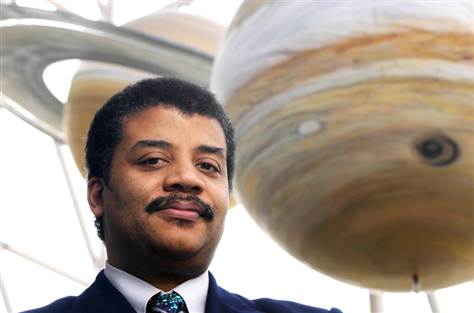
Quickly, without using Google or Wikipedia, name as many renowned black scientists as you can. I only came up with three: George Washington Carver (inventor, botantist, polymath), Neil deGrasse Tyson (astrophysicist at the Hayden Planetarium), and Sylvester James Gates Junior (theoretical physicist working on superstring theory). I think part of the problem is that black scientists are hardly ever mentioned or given any recognition. Many black Americans don't have scientific role models and instead revere the musicians, actors, and athletes.
To illustrate, let me tell you a quick story. A former house tutor of mine worked as a high school teacher in DC. He told me that when he asked his students (most of whom were black) what they wanted to be when they grew up, they said they wanted to either:
A) Play in the NBA
B) Play in the NFL
C) Become a famous hip-hop artist
He then went on to teach them how to calculate the probability of making it to the NBA or NFL. The get a rough estimate for the NBA, divide the number of NBA players by the number of aspiring high school basketball players. If you work it out, it's essentially zero.
Now, there is nothing wrong with going into the entertainment industry. However, to make it big in entertainment is extremely difficult and lot of luck is involved. It would be more realistic for more young black high school students to continue their studies in math and science.
Friday, January 6, 2012
The Gay Enigma
Evolutionarily speaking, homosexuality is puzzling. Homosexual intercourse produces no offspring and is a waste of time and energy (again, evolutionarily speaking). Nevertheless, many species exhibit this behavior. Let us explore the possible reasons why homosexuality persists.
One theory is the “Gay Uncle” theory. Although, your gay uncles and aunts don’t have biological children of their own, they can help raise you while your parents are busy hunting and gathering food. You still share a quarter of your uncle’s genes so if you have at least three other siblings or first cousins being taken care of, then the evolutionary math adds up. The problem with this theory is that gay men and women do not spend much of their time taking care of their nieces and nephews.
Another is called the “Sneaky Fucker” theory. Let’s say that caveman Fred is off to hunt for the day but wants to protect his lover Wilma from predatory animals and interested men while she stays home. Fred feels safe though since he asked his gay best friend Barney to protect her while he’s gone. Although Barney is almost exclusively gay, he is infatuated with Wilma; he also knows that Wilma wants Barney as well. Unbeknownst to Fred, Barney and Wilma have a secret affair. However, straight men tend not to ask gay men to protect their wives and girlfriends. (However, kings did have eunuchs to protect their concubines; “Eunuch” literally means “bed keeper” in Greek.)
A far more convincing theory has to do with genetics. The groundbreaking sexologist Alfred Kinsey found that human sexuality is not black-and-white but a spectrum with a lot of gray area. While most people are sexually attracted to the opposite sex, sometimes they do feel same sex attraction and act upon them. We can think of homosexuality as a recessive trait that straight individuals can carry. Therefore, full-blown homosexuality may be the result of someone receiving the recessive gay genes from both parents.
Some may even argue that we can skip the genetics part and solely rely on Kinsey’s spectrum theory. As long as a lesbian feels an attraction to one man to have sex with him at least once, she has a chance of passing on her genes. The idea: you only have to be “straight enough” make it through to the next round in natural selection.
One more possibility is worth mentioning: homophobia. Because of the rampant discrimination that exists around the world, many gay men and women stay in the closet and have heterosexual relationships. I went through a fascinating book called Gay in America by Scott Pasfield and I was amazed by how many of these gay men had biological children with their ex-wives, especially ones from the South and Midwest. I also asked my parents if they personally knew any gay Koreans back in Seoul. They said they couldn’t think of a single one and everyone there eventually gets married and has kids. According to my dad, most gay Koreans are in the closet because of the intense homophobia and strong Confucian values that permeate Korean culture.
One thing that is unclear is if the percentage of homosexuals will decrease as time goes on. As we become more tolerant of gays in our communities, fewer gays will be pressured into heterosexual relationships. On the other hand, we now have the technology and means to enable same-sex couples to have biological children of their own so the percentage of gays could increase.
As a final note (in case it wasn’t clear), I’d like to remind readers that I am not making any moral justifications for homophobia. Just because it may have a served an evolutionary purpose does not mean that it is right.
Thursday, December 15, 2011
How technology will affect human evolution and improve sexual equality
I understand that one major assumption I need to make is that our species will continue to exist long enough on evolutionary time scales. Although I like to consider myself an optimist, I am a realist first and I do have my doubts. The rate at which technological advances are made is far exceeding evolution’s. Thus, we are equipped with increasingly more dangerous nuclear weaponry with prehistoric brains. However, let’s assume that we somehow overcome the numerous adversities that threaten our existence (e.g. global warming, overpopulation, terrorism, financial collapse, nuclear warfare).
From a scientific perspective, what is life? Simply put, life is gene survival. Our bodies are vehicles for gene survival: we live and reproduce. Technological innovations have given us the tools to extend our lifespans (vaccinations, antibiotics, surgeries) and increase our reproductive possibilities (online dating, in vitro fertilization, cloning). People who are best able to survive and reproduce will be more likely to make it to the future rounds of natural selection and technology has already been deeply infused to advance human life.
Technology can also change gene survival in another way. A good example is birth control. I have little doubt that this will be a huge factor in shaping the female psyche. Sex is pleasurable because it is vital for making more genetic copies. With birth control, we can simply enjoy these pleasures with drastically reduced chances of pregnancy. Then having children will be more of a conscious choice rather than a consequence of passionate lust. A major consequence is that women will not be as picky about which men to sleep with. However, women will still be picky about who their long-term partners will be but roughly as much as men are.
Another prediction is the decrease in sexual dimorphism in our species. Sexual dimorphism is simply the physical difference between males and females in a species. Men are on average taller, heavier, and stronger than women. As the socioeconomic playing field levels out (as women have greater access to higher education and lucrative jobs), I think this difference (or least the preference in women) will diminish. Exceptional physical prowess will become less of an asset to men in the mating game as physical strength decreases in survival value. As women continue to gain more power and status, the social roles of men and women are going to overlap more and more until gender roles become almost meaningless. This is essentially the case with chimpanzees (our closest genetic cousins with essentially no sexual dimorphism) although they are more matriarchal.
In conclusion, biological equality between the sexes will help enforce social equality and this can come about as technology alters our bodies and minds. I must add that this does not imply social equality for all. Social classes will still exist as well as differences in physique and intelligence. I don’t think that will ever change due to the nature of evolution. However, that does not mean that we should not do our best to lessen the inequalities that will persist at any stage of our biological and cultural development.
Thursday, November 17, 2011
How Liberal is Harvard?
Many Harvardians think of Harvard as a liberal institution. Our current president is an alumnus as well as two other Democratic presidents (Franklin D. Roosevelt, John F. Kennedy). Elena Kagan, a pro-choice Supreme Court Justice nominated by Barack Obama, received her J.D. from Harvard as well. Most undergrads who are affiliated with a political party are Democrats. At Harvard, being a Republican makes you a bit less cool than if you weren’t. (If you are an independent, you might be a closet Republican.)
However, since Occupy Harvard began last Wednesday (November 9, 2011), I began to question Harvard’s liberalness. The general consensus among Harvard students is that the occupation is absurd, purposeless, useless, annoying, and idiotic. My feeling is that the students don’t think the occupiers should be doing this and the former look down on the latter as bothersome troublemakers who are disturbing the peace at Harvard Yard (although the Yard is a lot quieter now without those bumbling tourists).
Again, I don’t agree with a lot of the occupiers’ views but I commend them for standing up for what they believe in a non-violent way (with the exception of the brief altercation with the police that occurred on November 9). They are fighting for social equality, decreasing the financial burdens on the lower and middle classes, regulation of financial markets, more active government programs to create jobs and provide welfare, and for the top 1% to pay their share of taxes. Unless I am severely mistaken, these are exactly what Democrats fight for. If Democrats have ANY values, they are reflected in the main requests made by the Occupy movements.
Honestly, I think Harvard students are more libertarian than completely liberal. This will probably become more apparent once they graduate and start working. The average Harvard student is very independent and has a Herculean work ethic. They know that they had to work very hard to get into an elite college. (Luck alone will not get you into Harvard, despite what naysayers may say.) Many will end up making six-figure salaries and be content with the financial freedom they will enjoy. (Again, this is post graduation; obviously, not now!)
Anyway, that’s what has been going through my mind lately. Feel free to disagree but I don’t think most Harvard students are that interested in the common American’s welfare. They don’t want to change the system; they want to win it.
Tuesday, September 27, 2011
The Dilemma for Female Intellectuals
Both men and women struggle with the many outdated machinery that has been biologically hardwired into us. However, most women face a unique adversity that men generally don’t: their social statuses are highly dependent on their physical attractiveness, youth being one of the most important.
An intellectually curious woman may want to continue her education by applying to a doctoral program (to become a surgeon, scientist, professor, etc.) but these programs require a considerable amount of time and effort to complete. Now men also face this problem but they aren’t trading off their most reproductively fertile years the way women do. A man can hold off having children until he acquires his advanced degree. His attractiveness to women would most likely increase because his earning potential will increase and his degree would signal intelligence (something that women tend to value more in men than vice versa). On the other hand, a woman will be close to thirty by the time she gets her doctoral degree. Not only does she miss her reproductive peak, she will have more and more difficulties bearing children from that point onward. Men are (at least subconsciously) aware of this and will find the same woman less attractive.
Please note that this does not mean that these women are hopeless. One of the truly remarkable things about life is that for each person, there is someone. (It seems that people who do not get married choose not to.) The point is that their options will be more limited.
What can we do to remedy this situation? One strategy is to provide extra funding and to cut tuition costs for these women pursuing higher education (specifically for graduate, law, medical, and business schools). Then perhaps having a child could be more affordable for an aspiring or current mother. Also, she may not have to take on another job and will thus have extra time to meet prospective mates.
Another would be to adopt a system similar to Europe’s. The option of specialization at an earlier age (e.g. in high school) would lead to younger doctors and other educated professionals. This way, they can start working by the time they are in their early to mid-twenties. Of course, an obvious downside is that career changes may become more difficult but there will always be tradeoffs in these situations.
The rate at which technology alters our social circumstances vastly outpaces natural selection’s, placing an unfair burden on women. Now, I don’t want to overshadow the modern evolutionary conflict that men go through since there are plenty. In the future, I will discuss some of the important modern evolutionary obstacles that men face today.
Note: The term “modern evolutionary conflict” is one that I simply made up.
Sunday, September 4, 2011
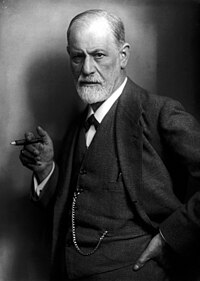
Surely You’re Joking, Dr. Freud!
When people are asked to name famous psychologists, most people can only name one: Sigmund Freud. On the other hand, hardly any psychologist takes Freud’s ideas seriously. Freud is more frequently cited by philosophers, literary critics, historians, and social studies scholars. This is because most of his ideas weren’t scientific yet made a deep impact in modern intellectual discourse.
Freud began his career as an Austrian neurologist. He first garnered fame in the medical community for coming up with an “effective” prescription to remedy concentration loss and fatigue, cocaine. He also frequently used cocaine to help him pursue his clinical research and practice as well as deal with his depression. Reports of cocaine addiction, abuse, and other health risks began to spread and tainted his reputation as a doctor. Eventually, he stopped supporting cocaine use although he continued to use it himself.
Freud’s later work focused on the nature of the unconscious. He believed that most of human behavior was not conscious and was governed by areas in the brain that were out of our immediate control. He sought to unlock repressed thoughts through dream interpretation and formulating a theory of psychoanalysis that was heavily based on sexual urges.
The first lasting contributions to the theory of the unconscious were the stages of psychosexual development. From birth until one year of age, we are in the oral stage. Our sexual sensations are focused on our mouths. If you give anything to a newborn, his/her immediate reaction is to place the object into the mouth. The next stage occurs from one to three years of age, the anal stage. During this stage, you can either develop the pleasure to retain your feces or the pleasure to expend it. People who develop the former will be obsessively neat and orderly while those who develop the latter will be disorganized, messy, and possibly coprophiliac. The phallic stage then occurs from three to six years of age. This is when boys and girls start to develop their sexualities. The boy wants to have sex with his mother but realizes that she is taken by his father; the boy develops a fear of having his penis cut off by his father so his anxiety turns into a hatred for his father and desires to kill him; he soon realizes that it is better to befriend and model his father so that one day he can find a woman who is like his mother. This is called the Oedipus complex. A girl will develop an Electra complex where she envies her father’s penis and wants to have sex with him but he is taken by her mother; this is basically the female equivalent of the Oedipus complex but penis envy replaces castration anxiety.
The next additions to his theory were the id, ego, and super-ego. The id is what we are first born with. It is the most basic part of our minds that tell us to act on the “pleasure principle,” to seek pleasure and avoid pain. Then we develop the ego which acts on the “reality principle,” to balance reality with the desires of the id; it provides our common sense and reason. The last part that we develop is the super-ego which acts on the “moral principle,” to ensure we behave in a socially acceptable and ethical manner. The super-ego often acts against the id, causing the ego much distress. A simplified analogy would be the following: the ego is Tom the Cat, id the devil on his left shoulder telling him to eat Jerry the Mouse, and the super-ego is the angel on his right shoulder telling him to let Jerry go.
Freud attempted to cover almost every aspect of social life in the 20th century. His ideas about religion, God, morality, advanced civilizations, fetishes, and psychiatric disorders are still well-known among Western academics. American feminists and pious Christians frown on him while European feminists and secularists admire him. Right or wrong, his ideas are worth considering to give you an idea of how to think in a creative and unconventional way. (To this day, one of the most interesting books I read was his Civilization and Its Discontents.)
Subscribe to:
Posts (Atom)