Thursday, November 17, 2011

How Liberal is Harvard?


            Many Harvardians think of Harvard as a liberal institution.  Our current president is an alumnus as well as two other Democratic presidents (Franklin D. Roosevelt, John F. Kennedy).  Elena Kagan, a pro-choice Supreme Court Justice nominated by Barack Obama, received her J.D. from Harvard as well.  Most undergrads who are affiliated with a political party are Democrats.  At Harvard, being a Republican makes you a bit less cool than if you weren’t.  (If you are an independent, you might be a closet Republican.)

However, since Occupy Harvard began last Wednesday (November 9, 2011), I began to question Harvard’s liberalness.  The general consensus among Harvard students is that the occupation is absurd, purposeless, useless, annoying, and idiotic.  My feeling is that the students don’t think the occupiers should be doing this and the former look down on the latter as bothersome troublemakers who are disturbing the peace at Harvard Yard (although the Yard is a lot quieter now without those bumbling tourists).

Again, I don’t agree with a lot of the occupiers’ views but I commend them for standing up for what they believe in a non-violent way (with the exception of the brief altercation with the police that occurred on November 9).  They are fighting for social equality, decreasing the financial burdens on the lower and middle classes, regulation of financial markets, more active government programs to create jobs and provide welfare, and for the top 1% to pay their share of taxes.  Unless I am severely mistaken, these are exactly what Democrats fight for.  If Democrats have ANY values, they are reflected in the main requests made by the Occupy movements.

Honestly, I think Harvard students are more libertarian than completely liberal.  This will probably become more apparent once they graduate and start working.  The average Harvard student is very independent and has a Herculean work ethic.  They know that they had to work very hard to get into an elite college.  (Luck alone will not get you into Harvard, despite what naysayers may say.)  Many will end up making six-figure salaries and be content with the financial freedom they will enjoy.  (Again, this is post graduation; obviously, not now!)

            Anyway, that’s what has been going through my mind lately.  Feel free to disagree but I don’t think most Harvard students are that interested in the common American’s welfare.  They don’t want to change the system; they want to win it.

Tuesday, September 27, 2011

The Dilemma for Female Intellectuals


One of the biggest challenges that we face is “the modern evolutionary conflict,” the conflict between our evolutionary adaptations and our modern environment.  Aside from the obvious geographical change that most people now experience (since most people no longer live in sub-Saharan Africa), the social change is even more radical.  For example, our life expectancy has more than tripled since the appearance of the first humans in an extraordinarily small amount of time, but our brains have not developed to take a half-century of our lives into full perspective.

Both men and women struggle with the many outdated machinery that has been biologically hardwired into us.  However, most women face a unique adversity that men generally don’t: their social statuses are highly dependent on their physical attractiveness, youth being one of the most important.

An intellectually curious woman may want to continue her education by applying to a doctoral program (to become a surgeon, scientist, professor, etc.) but these programs require a considerable amount of time and effort to complete.  Now men also face this problem but they aren’t trading off their most reproductively fertile years the way women do.  A man can hold off having children until he acquires his advanced degree.  His attractiveness to women would most likely increase because his earning potential will increase and his degree would signal intelligence (something that women tend to value more in men than vice versa).  On the other hand, a woman will be close to thirty by the time she gets her doctoral degree.  Not only does she miss her reproductive peak, she will have more and more difficulties bearing children from that point onward.  Men are (at least subconsciously) aware of this and will find the same woman less attractive.

Please note that this does not mean that these women are hopeless.  One of the truly remarkable things about life is that for each person, there is someone.  (It seems that people who do not get married choose not to.)  The point is that their options will be more limited.
       
What can we do to remedy this situation?  One strategy is to provide extra funding and to cut tuition costs for these women pursuing higher education (specifically for graduate, law, medical, and business schools).  Then perhaps having a child could be more affordable for an aspiring or current mother.  Also, she may not have to take on another job and will thus have extra time to meet prospective mates.

Another would be to adopt a system similar to Europe’s.  The option of specialization at an earlier age (e.g. in high school) would lead to younger doctors and other educated professionals.  This way, they can start working by the time they are in their early to mid-twenties.  Of course, an obvious downside is that career changes may become more difficult but there will always be tradeoffs in these situations.

The rate at which technology alters our social circumstances vastly outpaces natural selection’s, placing an unfair burden on women.  Now, I don’t want to overshadow the modern evolutionary conflict that men go through since there are plenty.  In the future, I will discuss some of the important modern evolutionary obstacles that men face today.

Note: The term “modern evolutionary conflict” is one that I simply made up.

Sunday, September 4, 2011

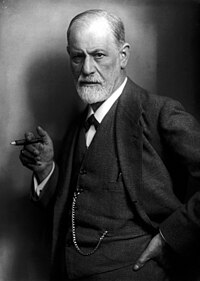
Surely You’re Joking, Dr. Freud!

                When people are asked to name famous psychologists, most people can only name one: Sigmund Freud.  On the other hand, hardly any psychologist takes Freud’s ideas seriously.  Freud is more frequently cited by philosophers, literary critics, historians, and social studies scholars.  This is because most of his ideas weren’t scientific yet made a deep impact in modern intellectual discourse.
                Freud began his career as an Austrian neurologist.  He first garnered fame in the medical community for coming up with an “effective” prescription to remedy concentration loss and fatigue, cocaine.  He also frequently used cocaine to help him pursue his clinical research and practice as well as deal with his depression.  Reports of cocaine addiction, abuse, and other health risks began to spread and tainted his reputation as a doctor.  Eventually, he stopped supporting cocaine use although he continued to use it himself.
                Freud’s later work focused on the nature of the unconscious.  He believed that most of human behavior was not conscious and was governed by areas in the brain that were out of our immediate control.  He sought to unlock repressed thoughts through dream interpretation and formulating a theory of psychoanalysis that was heavily based on sexual urges.
The first lasting contributions to the theory of the unconscious were the stages of psychosexual development.  From birth until one year of age, we are in the oral stage.  Our sexual sensations are focused on our mouths.  If you give anything to a newborn, his/her immediate reaction is to place the object into the mouth.  The next stage occurs from one to three years of age, the anal stage.  During this stage, you can either develop the pleasure to retain your feces or the pleasure to expend it.  People who develop the former will be obsessively neat and orderly while those who develop the latter will be disorganized, messy, and possibly coprophiliac.  The phallic stage then occurs from three to six years of age.  This is when boys and girls start to develop their sexualities.  The boy wants to have sex with his mother but realizes that she is taken by his father; the boy develops a fear of having his penis cut off by his father so his anxiety turns into a hatred for his father and desires to kill him; he soon realizes that it is better to befriend and model his father so that one day he can find a woman who is like his mother.  This is called the Oedipus complex.  A girl will develop an Electra complex where she envies her father’s penis and wants to have sex with him but he is taken by her mother; this is basically the female equivalent of the Oedipus complex but penis envy replaces castration anxiety.
                The next additions to his theory were the id, ego, and super-ego.  The id is what we are first born with.  It is the most basic part of our minds that tell us to act on the “pleasure principle,” to seek pleasure and avoid pain.  Then we develop the ego which acts on the “reality principle,” to balance reality with the desires of the id; it provides our common sense and reason.  The last part that we develop is the super-ego which acts on the “moral principle,” to ensure we behave in a socially acceptable and ethical manner.  The super-ego often acts against the id, causing the ego much distress.  A simplified analogy would be the following: the ego is Tom the Cat, id the devil on his left shoulder telling him to eat Jerry the Mouse, and the super-ego is the angel on his right shoulder telling him to let Jerry go.
                Freud attempted to cover almost every aspect of social life in the 20th century.  His ideas about religion, God, morality, advanced civilizations, fetishes, and psychiatric disorders are still well-known among Western academics.  American feminists and pious Christians frown on him while European feminists and secularists admire him.  Right or wrong, his ideas are worth considering to give you an idea of how to think in a creative and unconventional way.  (To this day, one of the most interesting books I read was his Civilization and Its Discontents.)

Wednesday, July 27, 2011

New Blogging for a Friend

Just a note, I will also be posting science blogs on Tony Sterle's blog: www.alittlebitofliberal.com

It's a cool political blog with some very smart people and it already has a ton of followers (LITERALLY).  Definitely check it out!

A Closer Look at Our Penises


            Compared to the other male primates, men have very different looking penises.  For starters, a man’s has a bulbous tip (the glans) that most other species lack.  Why is it there?  A better way to frame the question is: what evolutionary function did it serve?  Can answering this question give some sort of insight into human sexuality?
            Let’s try to address the issue of what purpose this mushroom shape serves by noting another important attribute of a man’s member: its size.  The male reproductive organ of a human is much larger than any of the other primates’.  Even the average 450-pound male gorilla has an erect length of only two inches, approximately three times smaller than the average man’s.  This comparative largeness coupled with the explosiveness of ejaculation (up to two feet) suggests that during sexual intercourse, the man is trying to reach the uppermost parts of the vagina.  This would not only maximize the coverage of fertilization grounds in the woman’s body but also fight off semen that other men may have left behind.  After all, most sperm cells are not for fertilizing the egg but for fighting off other sperm.  (Note that this would not have been necessary if women weren’t promiscuous to some degree; there’s not much we can do about that now although countless societies have harshly tried.)
            Now, we can get to the glans’ function: to scoop out whatever semen might be left in there.   Evolutionary psychologists have conducted experiments with artificial penises, vaginas, and semen that show the mechanical sexual (ergo evolutionary) advantage of having a glans as opposed to a straight shaft.  The fake penises (commonly known as dildos) with the glans scooped out over 90% of the “semen” in the “vaginas,” much more than the ones without one (less than 40%).
            How would the man make sure to not remove his own?  Well, all of this information suggests that the refractory period precisely remedies this possibility.  As soon as he ejaculates, the penis decreases in size and hardness and becomes very sensitive, making further stimulation uncomfortable.  This temporary impotence prevents him from undoing his doing.
            There are many fascinating insights into human behavior from combining evolutionary logic with human physiology.  Why are our brains so large, particularly our cerebral cortexes?  Why are men’s testes larger than gorillas’ but smaller than chimpanzees’, despite the fact that we smaller than the former but larger than the latter?  Why do most women have unnecessarily large breasts?  (The size is mostly made up by fat tissue that doesn’t provide any more space for milk production or storage.)  In the future, I will post more topics that will explore the study of evolutionary psychology, the science of why we behave the way we do by tracing back to human nature’s origins.
            For more information about this interesting aspect of nature, check out this great article from the Scientific American: http://www.scientificamerican.com/article.cfm?id=secrets-of-the-phallus

Monday, June 13, 2011

Summer Reading at Harvard

For Cambridge residents: Check out the basement of the Harvard Bookstore on Mass Ave.  There are LOTS of very cheap books.  Here are some of the books I found:

The Universe and the Teacup by K. C. Cole
The Greatest Show on Earth by Richard Dawkins
Fabric of the Cosmos by Brian Greene
Euclid in the Rainforest by Joseph Mazur
The Stuff of Thought by Steven Pinker

The books by Cole and Mazur are about how mathematics explains the world.  Dawkins' book is about the evidence that supports the validity of evolution.  Greene's book is about the nature of space and time (aka spacetime as Einstein called it).  Pinker's book is about how language provides a window into the workings of the human mind.

Sunday, May 15, 2011

My Youtube Channel!

Hey, I decided to make a Youtube channel to promote my music online.  Here is the weblink: http://www.youtube.com/user/LesterKimMusic

I hope you enjoy this.  The video I posted is an original that I wrote a year ago.